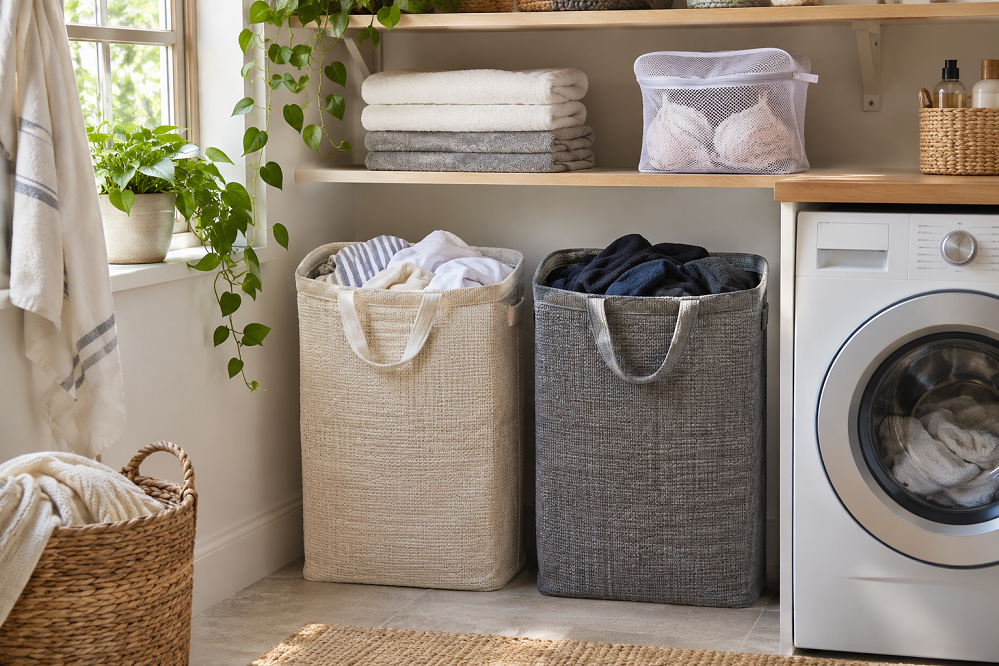
Laundry piles up quickly when sorting starts only after the washer is ready. A better setup gives clothes a place to go as they come off, so the work is divided into smaller decisions. You do not need a dedicated laundry room. A corner of a closet, a bathroom shelf, or a pair of baskets near the washer can be enough if everyone in the household understands how to use it.
Start by watching what happens on a normal laundry day. Where do clothes collect? Which items are often forgotten in pockets? Do towels get mixed with everyday clothing? A sorting station should answer those recurring questions. It should also fit the space you have, rather than requiring a room makeover or a long list of containers.
Pick the few groups that matter to you
Many households can begin with two groups: items that can be washed together and items that need separate attention. You might sort lights and darks, everyday clothes and towels, or regular loads and delicates. The useful categories depend on the clothes people actually wear and the way you do laundry. If two piles usually end up in the same load, combining them may save space and handling.
Resist adding a basket for every possible fabric or color before you have tried the basic system. Extra categories take floor space and ask people to make more decisions. Add a new group only when mixing those items creates a repeated problem. A mesh bag hung beside the station can hold small delicates without needing another full-size hamper.
Measure the spot before choosing containers
Measure the width and depth of the area where baskets will sit, including the space needed to open the washer or a closet door. In a narrow area, slim hampers may fit better than broad bins. If the station is in a shared bathroom or bedroom, look at the walking path too. A container that blocks a drawer or door will get moved, and then it stops being a dependable place for clothes.
Choose containers that are easy to reach and carry. A handle can help when you take a load to another floor. A soft-sided hamper can fit into a tight corner, while a rigid basket may be easier to load and unload. If the washer is nearby, an open container often makes it simpler to drop clothes in without removing a lid. Pick a style that people will use comfortably rather than one that only looks tidy when empty.
Give every group a clear destination
Place the containers in the order that makes sense for the room. If one group is washed more often, put that basket where it is easiest to reach. Keep the delicates bag or a small pocket-check tray beside the main hampers. There is no need to arrange everything symmetrically. It matters more that a person can tell where an item belongs without asking.
Labels can help in a household with different ages or laundry habits. Use plain words such as “towels” or “needs a separate wash.” A small picture can help younger children who are still learning to sort. If everyone already knows the categories, labels may be unnecessary. Keep them only if they reduce confusion.
Make pocket checks part of the routine
Small items are easy to miss when clothes go straight from a pocket to the hamper. A shallow dish or tray near the station gives coins, receipts, and other pocket finds a temporary place. Check pockets before loading a washer, then return the items to their owner or the spot where they belong. The tray should stay small enough that it does not become a second pile to manage.
Keep a mesh bag nearby for socks, lingerie, or other pieces you choose to protect during a wash. Put the bag where it is visible, and return it to the same hook after a load. If your household often loses pairs, a small basket for single socks can hold them until the match appears. Empty that basket occasionally so it does not become permanent storage.
Fit the station to a small home
When floor space is limited, look for vertical or collapsible options. A wall hook can hold a mesh bag, and a narrow hamper may fit beside a closet. A sturdy shelf can hold a compact basket if it is easy for everyone who uses it to reach. Avoid placing heavy, full baskets high above the floor. The station should be practical to load and carry.
If the washer and dryer are in a shared building or on another floor, use a portable hamper that can travel with the load. A tote with handles may help carry detergent and dryer sheets, while a simple note on the hamper can remind you which items need attention. Keep the kit light and limited to what you actually use. A complicated system is harder to maintain when you have to carry it.
Agree on what happens after sorting
Sorting only helps if the next person knows what each pile means. Decide whether people should turn clothes right side out, empty pockets, fasten delicate items in a bag, or leave special-care pieces on a hook. Keep the instructions short. If a garment needs an unusual treatment, a small tag or note can travel with it until wash day.
In a shared household, assign a simple next step rather than expecting one person to finish every load. Each person might bring their clothes to the station, while the person starting the washer checks the care labels and pockets. Or one person may handle the full cycle on a rotating day. The setup should make the division of work visible and workable for your household.
Keep products and clean laundry separate
Store detergent and stain-treatment supplies on a shelf or in a small caddy close to the washer, where they are easy for the adults who use them to reach. Keep lids closed and follow the product label for storage and use. If children or pets share the space, place laundry products somewhere they cannot access. Do not let containers crowd the sorting area; clothes need room to land.
Clean laundry needs a destination too. A folding surface, clean basket, or shelf near the dryer can keep finished loads from returning to the floor. If there is no counter, use a portable basket and fold items in the room where they will be put away. The best arrangement is the one that shortens the path from the dryer to drawers and closets.
Reset the station in a few minutes
After a load, return empty baskets to their usual spots, hang up the mesh bag, and clear the pocket tray. If one category keeps overflowing, take note of when it fills and adjust the hamper size or laundry rhythm. A small maintenance habit prevents the station from turning into a mixed pile. It is fine if the reset happens after a load or at the end of the day; choose a time that fits your routine.
Once a month, check whether the labels still match what people are doing. Remove a category no one uses, or add one that would prevent a recurring mix-up. Wash fabric hampers when needed and let them dry before filling them again. Keep the review practical rather than turning it into a full organizing project.
Start with two baskets and adjust
Begin with the groups that solve your biggest laundry frustration. Put the baskets where clothes already tend to collect, then see how they work through a week or two of normal loads. If someone keeps placing items in the wrong container, the label or location may need to change. If the station is always in the way, try a narrower setup or move it closer to the washer.
A good sorting station makes the next load easier to start. It gives clothing a clear place to go, keeps small items from disappearing into the laundry, and helps each person understand the routine. Build the smallest version that works in your home, then add only what proves useful.
Leave a Reply